Medical Disclaimer: This article is for informational purposes only and should not replace professional medical advice. Always consult your pediatrician for medical concerns regarding your child.
Combination Weaning: Mixing Purees and Finger Foods
By 6 months, your baby’s iron stores from birth are depleting, making complementary feeding crucial, and introducing a mix of textures can actually support their oral motor development more effectively than purees alone.
What You Need to Know
- WHO recommends starting complementary foods at 6 months of age.
- IAP guidelines suggest introducing a variety of food textures, including soft finger foods, from 6 months.
- By 8-10 months, most babies can manage a range of soft, mashed, and small finger foods.
- Introducing different food textures helps develop oral motor skills needed for speech development by 12 months.
- A baby’s nutritional needs increase significantly after 6 months, with iron-rich foods being a priority.
- By 12 months, about 75% of a baby’s diet should consist of family foods, with breast milk or formula complementing it.

The Indian Context: What Research Actually Says
Rava Kichadi
Region: Pan-India | Verdict: Excellent for combination weaning when prepared with minimal salt and spice.
Provides carbohydrates, protein, and essential micronutrients. Can be mashed for purees or given as soft, small lumps for finger foods.
Dal Pani / Dal Water
Region: Pan-India | Verdict: Good as a liquid base for purees or to moisten finger foods, but not a complete meal on its own.
Provides some protein and hydration. While beneficial, it’s low in iron and calories and should be supplemented with thicker foods.
Mashed Banana or Ripe Mango
Region: Pan-India | Verdict: Ideal for combination weaning, offering natural sweetness and essential vitamins.
Bananas offer potassium and fibre; mangoes provide Vitamin A and C. Their soft texture is good for both spoon-feeding and self-feeding.
Khichdi with Ghee
Region: Pan-India | Verdict: A versatile base for combination weaning, adaptable to both puree and finger food textures.
A balanced source of carbohydrates and protein. Ghee adds healthy fats crucial for brain development. Can be served as a soft mash or slightly firmer for finger foods.
Common Myths — Busted
Truth: Introducing soft finger foods alongside purees from 6 months can promote better pincer grasp development and oral motor skills, preparing them for chewing by 8-10 months.
Truth: When offered appropriately sized (e.g., thumb-sized strips) and textured (soft, easily mashable) finger foods, the risk of choking is significantly reduced, and gagging is a normal protective reflex.
Truth: A mixed approach mirrors how adults eat and helps babies learn to manage different food textures, which is essential for a varied diet and preventing picky eating later on.
When to See Your Paediatrician
- Persistent vomiting after trying new textures.
- Difficulty breathing or severe coughing fits (beyond normal gagging) after attempting to eat.
- Signs of dehydration (e.g., fewer than 6 wet diapers in 24 hours, sunken eyes).
- No interest in eating or significant weight loss/stagnation.

Parents Also Ask
My 7-month-old only eats purees. When can I introduce finger foods?
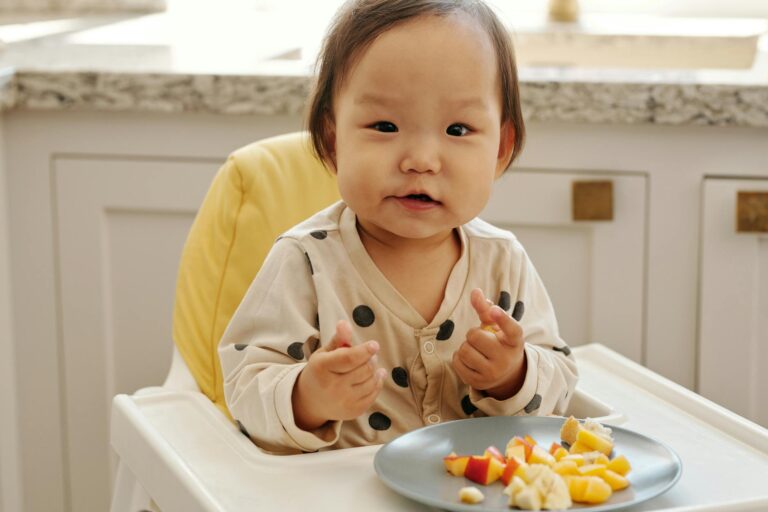
You can start introducing soft, safe finger foods alongside purees from 6 months! By 7-8 months, many babies are adept at picking up small pieces. Offer things like steamed carrot sticks, soft banana pieces, or small cubes of avocado. Aim for thumb-sized pieces that are easy to grasp.
Is it safe to mix purees and finger foods for my baby in one meal?
Yes, absolutely! Combination weaning is encouraged. Offering a spoonful of puree and then letting your baby self-feed a soft finger food can be a great way to introduce variety and promote independence. Ensure finger foods are soft and appropriately sized to minimize choking risks.
How much finger food should my 9-month-old eat?
By 9 months, your baby might be eating about 1/4 to 1/2 cup of finger foods per meal, depending on their appetite. Don’t focus too much on the quantity; watch for their cues. The key is exposure to different textures and flavours, with breast milk or formula still being a major source of nutrition.
Key Takeaways
- WHO recommends starting complementary foods at 6 months of age.
- IAP guidelines suggest introducing a variety of food textures, including soft finger foods, from 6 months.
- By 8-10 months, most babies can manage a range of soft, mashed, and small finger foods.
- Introducing different food textures helps develop oral motor skills needed for speech development by 12 months.
Track your baby’s health milestones on the ourlio app.